If I had to describe the supraspinatus trigger points with just one word, it would be stubborn. It took me a long time to really learn how to locate and release these little devils. If you’re serious about resolving a client’s shoulder pain complaint, you are going to have to go head-to-head with supraspinatus trigger points at some point during the process. Let’s take a look at this muscle and its trigger points, and find out what makes it so resistant to treatment.
The Supraspinatus Muscle
Anatomy & Biomechanics:Before we discuss its trigger points, we should touch on some of the anatomical and biomechanical features of the supraspinatus muscle itself. There is nothing too remarkable about this muscle, it’s a fairly small muscle that is located on the back of the shoulder blade, above the spine of the scapula. It extends laterally to wrap over the top of the head of the humerus to attach on its outside lip. The muscle lies underneath the upper Trapezius muscle (which is an important clinical consideration that we will discuss shortly), and has two main jobs:
- To Abduct the Arm at the Shoulder: Any movement that requires a person to raise an arm up to the side employs the work of the supraspinatus muscle.
- To Hold The Shoulder Joint Together: The glenohumeral (shoulder) joint is basically a ball-and-socket joint with only half of the socket. While this design gives the shoulder joint unprecedented range of motion, it also makes it extremely easy for the humeral head to slip out of the socket (dislocate). The tendons of the four rotator cuff muscles form a cuff around the humeral head to hold it within its socket. Contraction of the supraspinatus muscle is required to just let your arm hang by your side, as it creates a wedging action in the joint to support the weight of the arm (and the weight of anything held in the hand).
Raising the arm to the side is not as simple as it looks. In particular, the rotation of the shoulder blade throughout the motion typically goes unnoticed. While the deltoid muscle (middle head) assists the supraspinatus in abducting the arm, the upper trapezius and rhomboid muscles support arm abduction by rotating the shoulder blade upwards.
Supraspinatus Trigger Points and Referred Pain
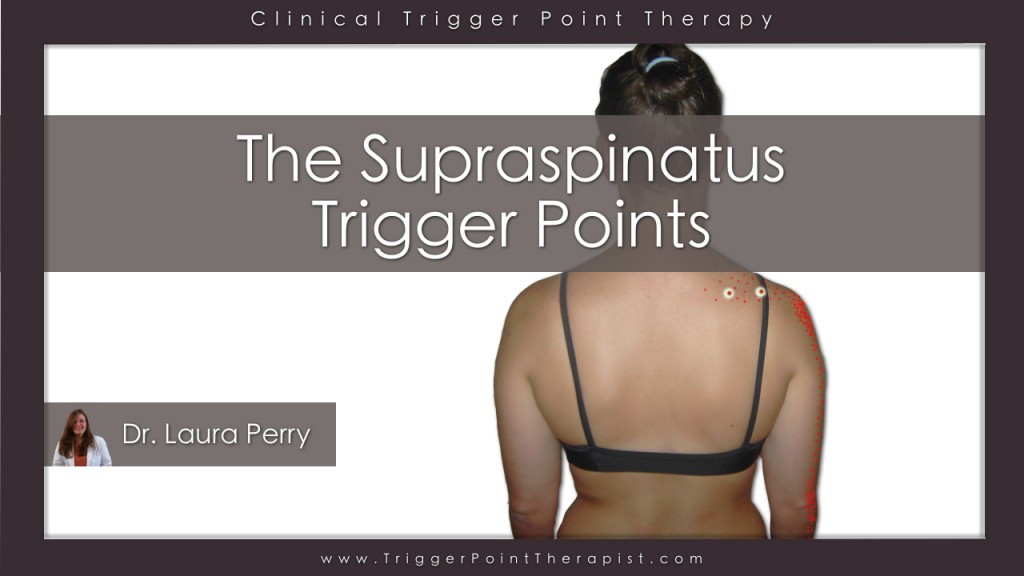
The supraspinatus muscle has two trigger points, one at each end of the muscle belly. Typically both of these trigger points are equally and simultaneously active.

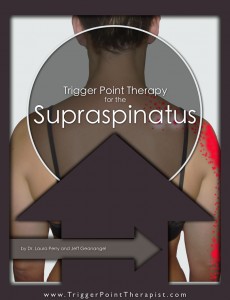
Pain from the supraspinatus trigger points is referred to the outside of the shoulder and elbow. In my personal experience, the elbow referral on the lateral epicondyle is more prominent during release of the supraspinatus trigger points. This pain pattern will occasionally include a forearm component as well.
What Causes Supraspinatus Trigger Points?
Trigger points in the supraspinatus are most frequently caused by activities that require loading of the arm, especially when the arm is hanging down to the side. Examples include:
- carrying a heavy suitcase
- moving heavy furniture
- overtraining in resistance training exercises such as the inclined bench press and military press
- working with arms overhead for long periods, such as when painting a ceiling
- long hours of typing at a keyboard with no elbow support
(Please see the Comprehending the Cause of Trigger Pointsarticle in the Trigger Point Therapy 101 Series for more information on the factors that cause trigger point activation.)
Supraspinatus Symptoms & Disorders
The following is a list of the symptoms and disorders commonly associated with Supraspinatus trigger points:
- Shoulder Pain When Lifting Arm: Strong pain in the shoulder when lifting the arm to the side is a hallmark of active supraspinatus trigger points. Often clients will compensate for an inability to raise the arm completely by raising their shoulder unnaturally.
- Shoulder Clicking / Shoulder Snapping / Shoulder Popping: Another hallmark of these trigger points is a snapping sound (and sensation) in the shoulder joint. Trigger point induced muscle tension disrupts the normal gliding action of the glenohumeral joint, causing the joint surfaces to grind. Releasing the supraspinatus trigger points typically resolves this condition, though tears in the glenoid labrum may also cause shoulder clicking.
- Shoulder Catch: Abnormal tension in the supraspinatus muscle may cause the humeral head to “climb the wall” of the glenoid fossa. When this occurs, the synovial tissues can become pinched causing a very painful catch to occur during certain arm raising movements. Releasing the supraspinatus trigger points can restore normal muscle tension to the muscle and eliminate the catching during joint movement.
- Subdeltoid or Subacromial Bursitis: This condition involves inflammation of the various shoulder bursae, and for the most part, is clinically indistinguishable from the symptoms associated with supraspinatus trigger points. While it is likely that these two conditions can coexist, bursitis may actually occur secondarily to trigger point activity in most cases.
- Rotator Cuff Lesions or Tears: A great deal of attention is given to these conditions by the medical establishment. While rotator cuff tears are easily diagnosed these days with MRI studies, the diagnosis of rotator cuff lesions can be rather ambiguous with only a very small percentage of the cases being confirmed by arthroscopic evidence of damage or inflammation. Myofascial trigger points in the rotator cuff muscles, especially supraspinatus trigger points, are thought to contribute the majority of the pain associated with these conditions. In cases with measurable tears of the rotator cuff, pressure-release techniques for the supraspinatus trigger points are favored over stretch-release techniques, for obvious reasons.
- Lateral Epicondylitis or Tennis Elbow: Supraspinatus referred pain to the lateral epicondyle region of the elbow is a frequently overlooked source of pain in the “tennis elbow” complaint.
Treatment of Supraspinatus Trigger Points
As I mentioned before, the supraspinatus trigger points can be very stubborn and resistant to treatment. I have found that there are two things that a therapist must do to achieve a lasting release of these trigger points:
- Release the Trapezius Trigger Points First: Because the supraspinatus muscle lies beneath the upper Trapezius muscle, any tension in the trapezius fibers will prevent the therapist from accurately locating and releasing the underlying supraspinautus trigger points. Before attempting to treat the supraspinatus trigger points, make sure that you have deactivated all of the trapezius trigger points first. Be sure to get adequate feedback from your client during treatment to confirm that you have targeted the right trigger point(s).The upper trapezius trigger point(s) will refer pain upward into the neck, while the supraspinatus trigger points will refer pain to the outside shoulder and elbow.
- Don’t Forget the Infraspinatus Trigger Points: Because of the close functional relationship of the two muscles, trigger points in the supraspinatus and infraspinatus muscles nearly always occur together. A failure to release the trigger points in one of these muscles will cause the trigger points released in the other muscle to quickly reactivate.
For complete instructions on how to locate and release these trigger points you can purchase the Trigger Point Therapy for Supraspinatus Video.
Related Articles:
- Shoulder Pain Trigger Points: The Multi-Headed Myofascial Pain Monster
- Trapezius Trigger Points Are Like Opinions…Everybody Has One
- Infraspinatus Trigger Points: The Magicians of Shoulder Pain
Related Instructional Videos: